
Powered by RheologiX™
CONTINUOUS ON-SITE SLURRY RHEOLOGY MEASUREMENT
VISCOSIGHT™ IS A ROBUST SIDE-STREAM RHEOMETER DEVELOPED FOR FULLY AUTOMATED, CONTINUOUS MONITORING AND ANALYSIS OF VISCOELASTIC PROPERTIES OF NON-NEWTONIAN SLURRIES.
Why
ViscoSight™?
Online Rheology Monitoring: Provides continuous rheological parameters such as Bingham Plastic Yield Stress, plastic Viscosity, Herschel-Bulkley indexes - flow behaviour (n) and consistency (k) in addition to relative Deposition Limit Velocities for non-Newtonian slurries.
Representative of Site Conditions: As near as possible in-process conditions, unlike offline laboratory testing.
Avoids Process Upsets: Rheological changes that precede process upsets, such as blockages, pump overloads, and erosion of beach slopes, can be detected early enough to act on.
Improves Efficiency: Live rheological data allows pumps, pipelines, and process systems to be operated closer to their optimum capacity.
Portable Design: Benchmark testing methodology packaged in a compact, fully autonomous format, ready for site deployment.
HOW IT WORKS

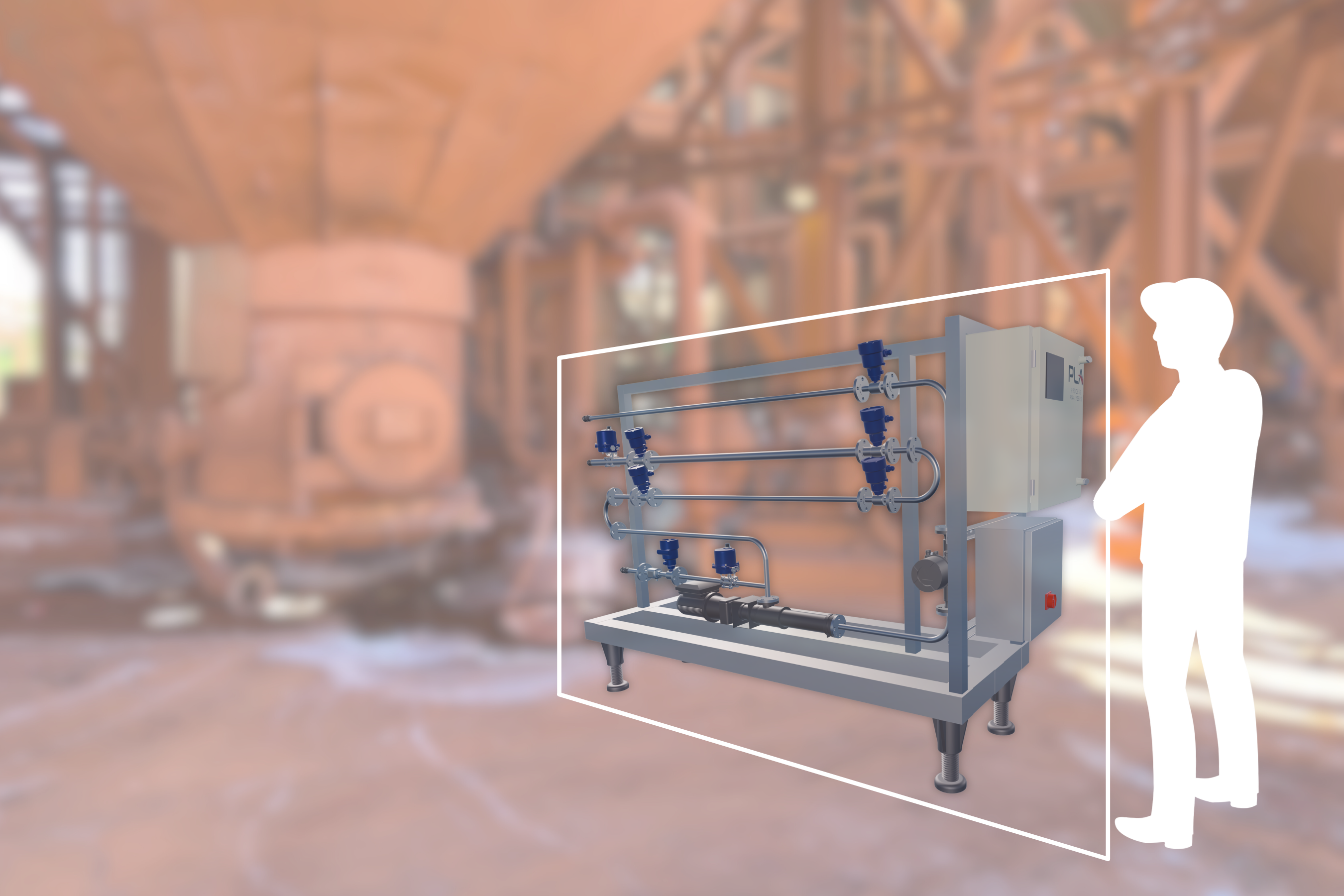
Connects to the process via a bypass line, continuously diverting a side stream of slurry through a measurement loop.
Pumps the slurry through two pipe sections of different diameters at varying flow rates, measuring pressure drop at each condition.
The proprietary RheologiX™ algorithm converts these measurements into a complete rheological profile.
The non-Newtonian parameters can then be integrated with the site's control systems.
We merged insights from key research papers to explain the Science of Bed Level and Rheology Measurements, the cost of not measuring them, and the limitations of current proxies.
“SHIFT FROM REACTIVE TO PROACTIVE SLURRY MANAGEMENT.”
OPERATIONAL INSIGHTS WITH VISCOSIGHT™
Ore Extraction and Feed Slurry Transport | Crushed Ore Slurry
Adjust water addition or pump speeds to maintain optimum flow under varying ore conditions, preventing pipeline blockages and pump overloading.
Grinding and Classification | Mill Discharge Slurry
Adjust water flow, mill speed, and cyclone feed pressure to maintain consistent grinding efficiency and classification performance.
Screening and Desliming | Clay Rich Slurry
Trigger spray water or dispersant addition precisely when viscosity rises, preventing screen blinding & reducing excessive dilution.
Reagent and Chemical Conditioning | Fine Particle Slurry
Provides a much clearer picture of when the slurry is becoming too structured (high yield stress) or too thick to allow proper mixing.
Flotation Circuits | Fine Particle Slurry
Adjust air rates, frother addition, or impeller speeds when viscosity rises to maintain bubble-particle interaction & protect recovery.
Gravity Separation | Dense Medium Slurry
Adjust medium density, wash water, and feed rate in real time to maintain stable separation under variable ore and fines loading.
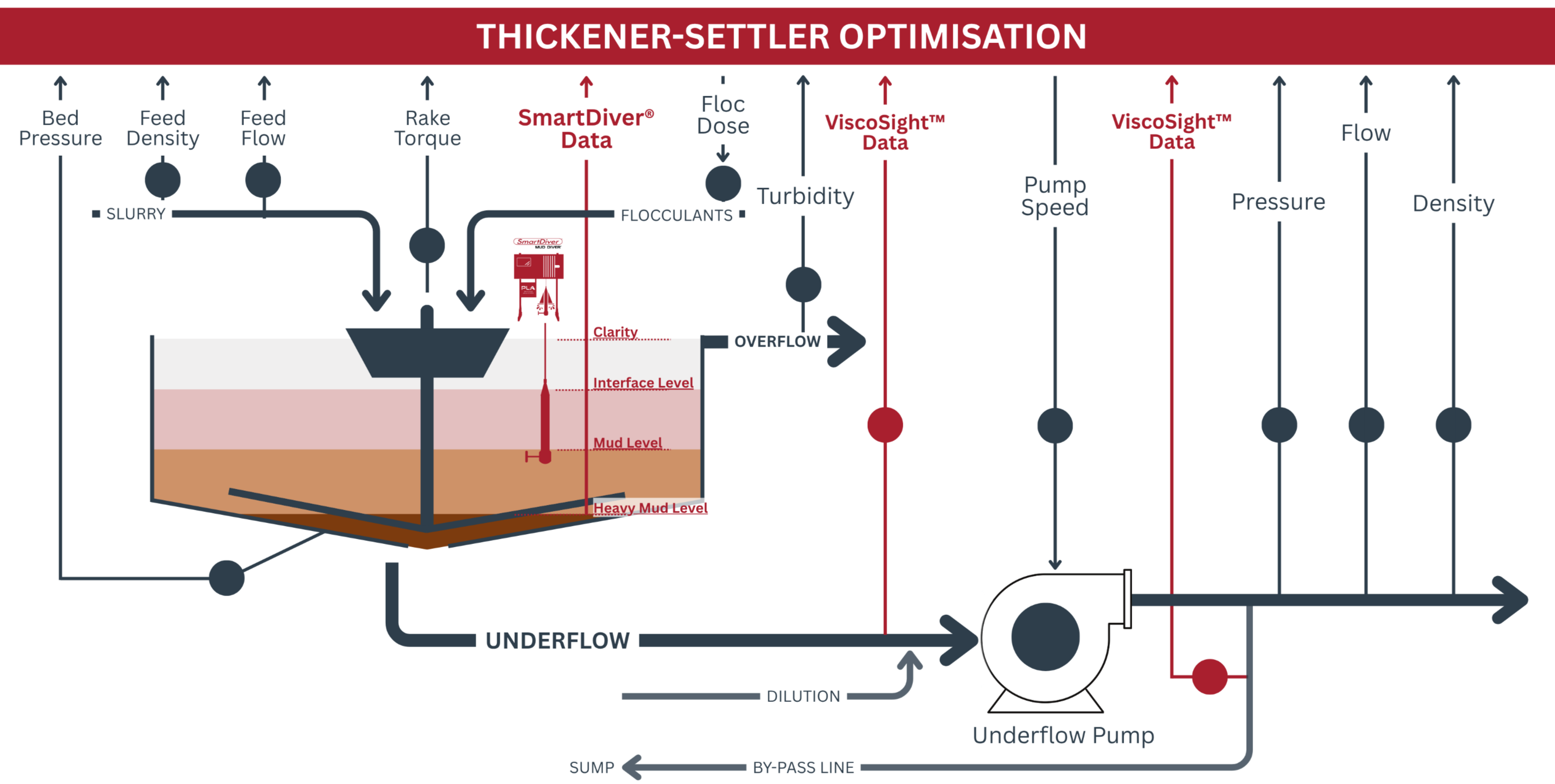
Thickening and Paste Preparation | Underflow & Tailings Slurry
Control flocculant dosing, underflow pump rates, and rake speed based on live yield stress data for consistent paste quality and improving water recovery.
Filtration and Dewatering | High Viscosity Pre-filter Slurry
Pre-condition slurry through dilution or dispersant adjustment before filtration to improve drainage rates and achieve consistent cake quality.
Tailings Transport and Deposition | Thick Tailings Slurry
Optimise pipeline velocity, pump power, and dilution through automated measurement cycles to prevent blockages and ensure consistent beach slope and deposition behaviour.
RELATED PRODUCT
